A lovely Litany to Saint Paul for you to pray on his feast day!
For many reasons during the past five years, I had to step away from blogging (including illness). But I’ve missed blogging and am delighted to be here again! While I am not sure how consistently I will be able to post, my plan is to start posting as I can and to gradually get back to posting at least weekly.
A special thank you and greeting to those of you who discovered this blog during the past couple of years, and for those of you who shared comments and feedback. I’ll be going through those in the next week and will try to respond to everyone.
One of the reasons I wanted to relaunch today is because the end of January is always a special time for me: January 24th is the feast of Saint Francis de Sales, patron of journalists, and also the day that the Pope usually releases his Message for the annual World Day of Social Communications. As usual yesterday, Pope Francis released his Message for the 58th World Day of Social Communications, which has as its theme: Artificial Intelligence and the Wisdom of the Heart: Towards a Fully Human Communication.Addressing the ethical use of artificial intelligence is very timely on the part of our Holy Father. (Generative AI is a technology that I’m still trying to wrap my head around!) But for me, the key part of the message is how the Pope highlights the importance of making our starting point the wisdom of the heart for all our communication choices.
Only by adopting a spiritual way of viewing reality, only by recovering a wisdom of the heart, can we confront and interpret the newness of our time and rediscover the path to a fully human communication. In the Bible, the heart is seen as the place of freedom and decision-making. It symbolizes integrity and unity, but it also engages our emotions, desires, dreams; it is, above all, the inward place of our encounter with God. Wisdom of the heart, then, is the virtue that enables us to integrate the whole and its parts, our decisions and their consequences, our nobility and our vulnerability, our past and our future, our individuality and our membership within a larger community.
This wisdom of the heart lets itself be found by those who seek it and be seen by those who love it; it anticipates those who desire it and it goes in search of those who are worthy of it (cf. Wis 6:12-16). It accompanies those willing to take advice (cf. Prov 13:10), those endowed with a docile and listening heart (cf. 1 Kg 3:9). A gift of the Holy Spirit, it enables us to look at things with God’s eyes, to see connections, situations, events and to uncover their real meaning. Without this kind of wisdom, life becomes bland, since it is precisely wisdom – whose Latin root sapere is related to the noun sapor – that gives “savour” to life.
In order to fully appreciate Pope Francis’ comments on artificial intelligence, you may find it helpful to also read his Message for the World Day of Peace, which he refers to several times.
My prayer for you, faithful readers and for all communicators, is that we can rediscover and grow in this wisdom of heart. God bless you!
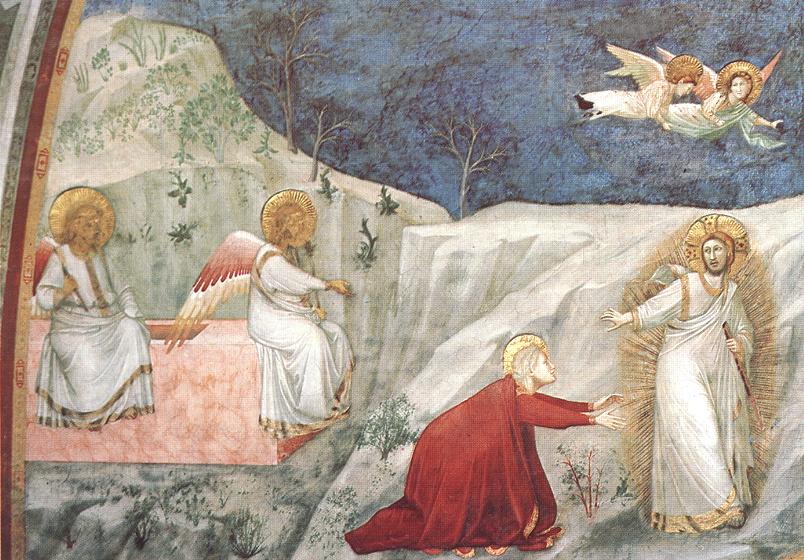
“Mary of Magdala came to the tomb early in the morning, while it was still dark, and saw the stone removed from the tomb.”
-John 20:1
Our experience of Lent this year has been intensified by the distress and restrictions caused by the worldwide pandemic, resulting in a situation many of us would not have imagined six months ago. At the same time, since mid-Lent we have been distanced from Mass and the immersive liturgies for Holy Week. How do we celebrate Easter when our world has turned upside down and we know that the global dark days are not over?
Sharing in the sufferings of the world certainly makes this Easter unique for me, but this is not the first Easter where joyful celebrations have felt out of place or even impossible. Several years ago, my Easter was a time of grief and loss: a close friend had just died of a devastating illness and two family members became seriously ill. Something inspired me to take Saint Mary Magdalene as my guide that Easter, and she has accompanied me through my Lents and Easters ever since. Initially, I chose her because of her immense grief at Jesus’ Crucifixion, but the more I prayed with her, the more I was moved by her relationship with Christ.
Saint Mary Magdalene is the perfect guide through Holy Week and Easter because, even before she met Jesus, she knew darkness and grief on a level that most of us can only imagine: Jesus healed her from seven demons. The Gospels don’t provide any details so we don’t know much about it, but it must have been a terrible experience of darkness.
When Jesus healed her, her desperate soul must have seen the first glimmer of hope—a hope that blossomed as she became Jesus’ follower. We don’t know how long Mary accompanied Jesus during his public life—a month? a year? Maybe long enough for that new, fragile hope to begin to take root in her heart. Nonetheless, her overwhelming sorrow at Jesus’ Crucifixion hints that her Lord’s suffering and death crushed her tender, newfound hope. She comes to visit Jesus’ tomb not because she has hope but because she carries immense grief. (Continue reading here.)
I recently read a newsletter from a lovely Christian writer who reflected that everything she saw was about COVID-19. I was struck by what she said, and the next day, I had to agree with her when Iwatched the beginning of Frozen II. Yes, I could apply many of the song lyrics to what we are going through now. Would you agree?
What movies can we watch that will help us not only celebrate Easter, but help us as we go through this time? While movies can provide a healthy break from our problems, film is a powerful medium that often can do more than provide a few hours of relief. Movies can uplift us, offer us food for thought, provide hope and insight into our own experiences of darkness, grief, and anxiety.
I’ve had a few Easters where I couldn’t put my heart into singing “Alleluia.” And what always made a difference to me was love: true, self-sacrificing love. I’ve felt blessed when I’ve received that kind of love, or finally recognized that someone loved me that way. I’ve also felt especially blessed when I have deeply loved someone else, to the point that no matter what suffering or challenges I was facing, it was worth it because of that love in my life.
Have you ever noticed that in most of the hugely popular films—I’m talking about big hits like Titanic, Twilight, Avengers films, and others—one of the main characters risks or actually sacrifices himself or herself out of love for another? I think these stories are super popular because we’re all drawn to this kind of radiant goodness. And I think all of us want to be loved like that. And want to be persons who love like that. Even if we’re afraid of the sacrifice.
The truth is, of course, that each of us is loved like that. Jesus died for love of each of us. The whole Triduum is about love: God’s love for us, and God’s desire to save us and be united with us here on earth and for all eternity. The love we experience with our loved ones is just a tiny glimmer of the love God has for each of us!
So during this week, I’d like to challenge you to look for these glimmers or reflections of God’s love in what you watch. Below, I’ll share some of my favorite films with this theme. (And if you share some of your favorite films with self-sacrificing love in the comments, via email, or on Facebook, I’ll keep adding what you share to my list!)
Sr. Marie Paul’s Favorite Films with the Theme of Self-sacrificing Love
Classics So many classics have this timeless theme. As Deacon Pedro Guevara Mann and I talk about in this week’s podcast/TV segment, love is the timeless, universal human value present in all cultures. When we love as Jesus loves—a self-giving, self-sacrificing love—we are most truly ourselves, fulfilling our highest potential.
A Tale of Two Cities (1935’s version is my favorite, but there are many screen versions.) A very selfish character is transformed into a truly loving one.
Casablanca (1942) is one of my all-time favorite movies and still stands as one of the best films ever made. No spoilers here, but this film is also about an unlikely transformation and self-sacrifice.
Ben Hur (1959 version) My favorite Easter film. The main story follows the tragedy and ultimately conversion of Judah Ben Hur, whose life intersects with Christ’s. Ultimately Judah is transformed by witnessing Jesus’ Passion and Death.
To Kill a Mockingbird (1962) is a powerful look at how self-sacrificing love can confront and win over evil—in this case, the evil of racism.
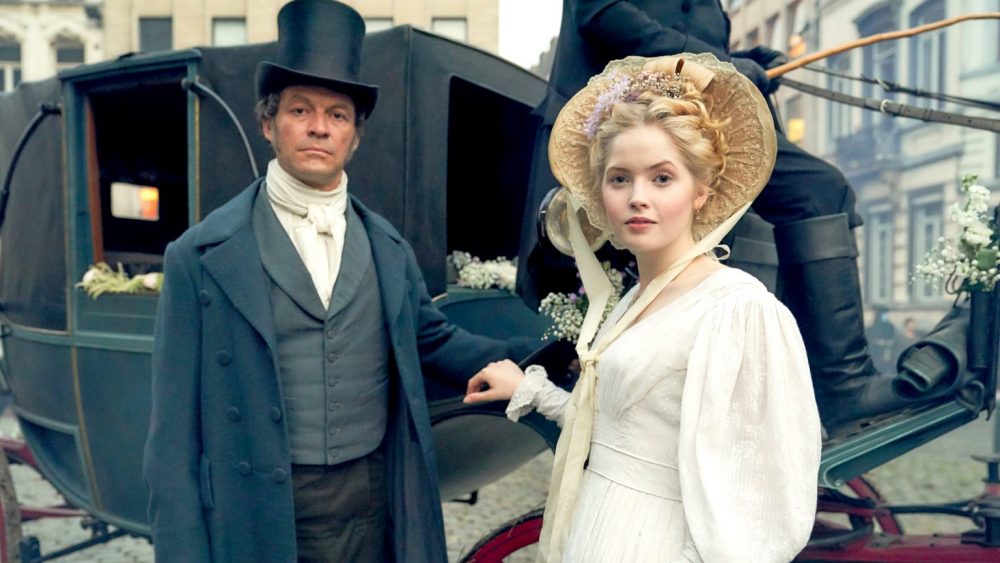
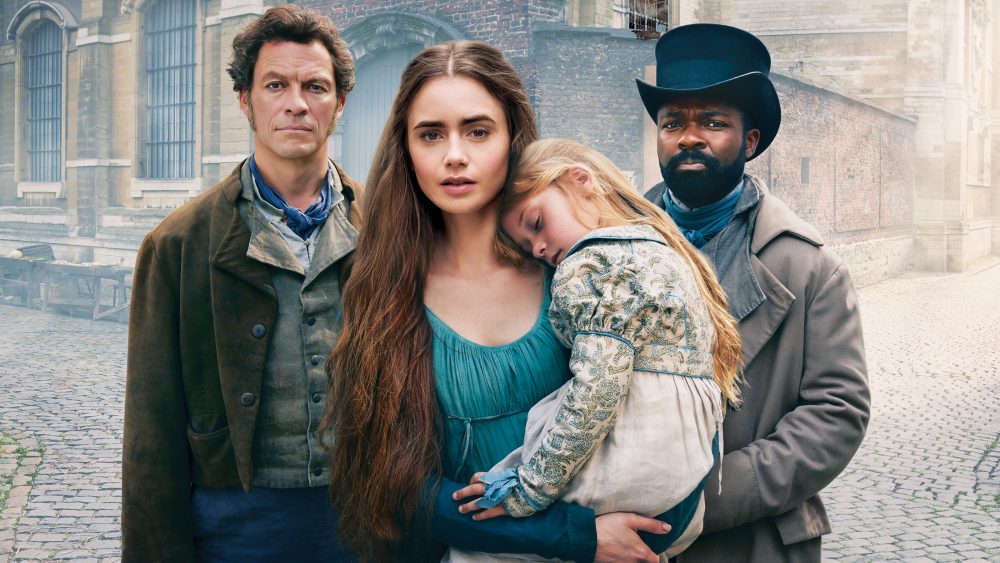
Les Miserables (2018 mini-series is by far my favorite, but here is my post comparing screen versions, especially if you want to do a two- or three-hour version) ****
The original Star Wars Trilogy (1977, 1980, 1983) Luke’s character, as he transforms from a whiny teenager into a Jedi knight who, in the midst of trying to save the galaxy from the oppression of the Empire, doesn’t turn his back on trying to save the hopeless Darth Vader. The most recent films also highlight this theme of self-sacrifice through several characters. (The Mandalorian has a
Superheroes, Sci-fi, and Fantasy
Perhaps the definition of a hero includes being willing to take risks or sacrifice themselves for others. For most superheroes, this can involve risking/sacrificing one’s life, but even children can be heroic in putting others’ well-being before their own. These genres are full of the themes of self-sacrifice, even those superheroes who initially don’t seem to be very caring. If you have a favorite Superman or Batman film, add it to the list here!
Many of the Star Trek films: The early The Wrath of Khan (1982)is impressive in this regard, but my favorite example from the Star Trek universe is from the opening of the Star Trek movie reboot in 2009, in which a new father gives his life to protect 800 others.
The Iron Giant (1999) is notable and remains a friend’s all-time favorite.
Spirited Away (2001) is a Japanese animated classic that shows the transformation of a sulky youngster into a brave young woman determined to rescue her parents, despite the risks to herself.
Harry Potter and the Deathly Hallows, Parts 1 and 2 (2010, 2011)Harry risks his life to save the school, his friends, or humanity—or all three!—in every film, but he deliberately does so in the last two films (which are really one big story).
The Avengers films (2008-2020…) One would need a whole website to discuss these films and the many superheroes who seek the good of others at great cost to themselves.
A Quiet Place (2018) This amazing thriller is one of the most recent films that powerfully demonstrates what it means to truly love.
Love Stories
Romances are supposed to be about love, but many times onscreen romantic relationships can seem to be more about using another person for one’s own fulfillment. “True love” may be a Disney cliche, but St. Paul gives us the characteristics of true love in 1 Corinthians 13: patient, kind, not envious or boastful or arrogant or rude, not insisting on its own way, not irritable or resentful, rejoicing not in wrongdoing but in the truth. Love “bears all things, believes all things, hopes all things, endures all things. Love never fails.” (1 Cor. 13:4-8)
Titanic (1997) In the face of tragedy, close-ups of cowardice and heroic rescues.
Pride and Prejudice (the 1995 mini-series is my favorite, but take your pick from the many screen versions).
Beauty and the Beast (1991 or 2017 are the Disney classics, but Jean Cocteau’s 1946 version is another classic!) This popular love story begins with one selfless act of love and ends with two.
Twilight Saga (films series 2008-2012) Bella’s love for others is consistently self-sacrificing, even if the vampires sparkle in the sun.
Religious Films
Risen (2016) is the first full-length film about Jesus’ Resurrection. Joseph Fiennes is the Roman centurion ostensibly searching for Jesus’ body after his Crucifixion…but what is he really searching for, and what is he willing to sacrifice to find it?
The Lion, the Witch, and the Wardrobe (2005),based on C. S. Lewis’ amazing Narnia series, is a wonderful Easter family film for the whole family.
The Lord of the Rings trilogy is full of characters who risk or give their lives to save others. From the powerful Gandalf to the humblest Sam, to the persevering Frodo. These three films are on my all-time favorites list.
Babette’s Feast (1987; with English subtitles) A contemplative look at a strict Christian community who take in a French refugee as a servant, Babette’s Feast is a powerful Eucharistic parable.
Some Recent Films:
Harriet (2019), which I just commented on last month, is a powerful film of faith and self-giving love.
JoJo Rabbit (2019) The quirky, tragic treatment of the height of World War II in Nazi Germany as seen through the eyes of a young German boy contains some surprising heroism.
Even the recent Abominable (2019) contains elements of self-giving love!
Everyday Heroism (Miscellaneous)
I have run out of time to add more categories, but I can’t skip these amazing films.
Marvin’s Room (1996) This powerful film about transformation, family, and sisters, doesn’t just give us countless examples of self-sacrificing love, but also show what a gift it is to have loved.
Finest Hours (2016) The based-on-a-true story heroics of members of the Coast Guard who try a daring rescue in the midst of a blizzard.
…and so many more.
So during this season, I’d like to challenge you to look for glimmers or reflections of God’s love in the films that inspire you.
I’d love to add to this list… If you’d like to send me suggestions—for now via email, but I’ll also try to check in to my Facebook page—I’ll add them.
Harriet is one of the most inspiring biopics that I have seen in a long time(apart from A Hidden Life). Co-written by director Kasi Lemmons and producer Gregory Allen Howard, the film chronicles Harriet Tubman’s desperate escape to freedom and then her dangerous journeys back as a conductor in the Underground Railroad—covering about 10 years of her life. Refreshingly, the film doesn’t try to deny or hide Harriet’s spirituality: she is known as Moses by the slave community, because she brings slaves to the promised land of freedom. I suspect a lot of viewers are like myself and don’t know much about Harriet Tubman, so my comments will be brief to avoid too many spoilers. (In this week’s Salt + Light Radio Hour, my commentary is just about one minute long–no spoilers!)
Cynthia Erivo is simply marvelous as Harriet, portraying emotions of terror, desperation, and righteous anger, while still carrying herself with remarkable conviction and dignity. Several of the minor characters in the film are fictional but overall the film is quite accurate in its portrayal of Harriet Tubman herself: a tiny woman of towering courage and determination who overcame overwhelming obstacles to build a new life for herself and to bring others—especially members of her family—to freedom.
Despite its PG-13 rating, Harriet would be an excellent film for families with teens and even some pre-teens who are mature enough to watch a film about slavery. A couple scenes with brutal violence are difficult to watch, especially for a sensitive younger person, but for the most part, the most disturbing violence is offscreen.
Windows to the Soul
Harriet Tubman suffered a severe head injury as a child, which seems to have caused brain damage. This injury was blamed for her “fits,” when she would fall to the ground and be unresponsive to the world around her, having dreams or “visions.” Harriet, who was deeply religious, often heard a message from God in her “visions.” In a welcome authenticity, the film imaginatively portrays Harriet’s religious experience. How refreshing it is to see filmmakers recognize the role of faith—or at least the possibility of the miraculous—in Harriet’s life, without discrediting or dismissing it. Harriet herself credited her repeated miraculous escapes to guidance from the Lord.
Harriet is a powerful film that engages on many levels, including the spiritual. It is a great film for Lent because Lent is meant to be its own journey to freedom—allowing the Lord to lead us and set us free from the sins that enslave us.
Themes to reflect on and pray with: faith, freedom, slavery, the dignity of the human person, racism, family, fidelity vs. betrayal, living by conviction, social justice.
I AM PATRICK is an excellent feature-length docudrama about the life of one of my favorite saints, the Apostle to Ireland. Written and directed by Jarrod Anderson and produced by CBN Films, the film is based on St. Patrick’s own Confession. The dramatic parts are well-acted, including the segments with John Rhys-Davies, where he is writing his Confession. I wish he had had a bigger role!
The interviews are well-done with a good mix of experts; the flow back and forth between interviews, narration, and dramatized scenes take us through the life of Saint Patrick in an overall linear fashion. The focus here is not on the legends and miracles, but the life of St. Patrick from his own words, which has plenty of drama in itself: he was kidnapped and enslaved at age 16; dramatically escaped after six years; heard God’s call in a dream to return to Ireland as a missionary; and evangelized Ireland under very difficult and hostile circumstances, at times risking his life to share the Good News of Jesus Christ.
For the most part, the film’s interpretation of Patrick’s life seems quite accurate. (I researched the life of Saint Patrick for a chapter in one of my books on the saints.) The only nuance I would dispute is found near the end of the film, when Patrick’s integrity, and perhaps his authority as bishop, is being questioned by a couple other bishops. In his Confession, Patrick doesn’t provide specifics, neither why he was being questioned nor how the situation was resolved. What he does make clear is that he was vindicated. However, the film seems to give Patrick a rather individualistic vibe, as if Patrick simply rebelled against the other bishops and went his own way. But to be in communion with the Church would have been very important to Patrick, and he would have wanted his new converts in Ireland to be in communion with the Church.
As the docudrama of a life of a saint, I AM PATRICK is remarkably well-done, with insightful interviews, well-acted drama, and narration that offers a helpful historical perspective. The quotations from Patrick’s Confession don’t just provide a remarkable authenticity, but are particularly moving in revealing St. Patrick’s depth of emotion, passion for Christ, and conviction for evangelization. Watching this docudrama is an informative delight, both for those who don’t know Saint Patrick well (or only through popular legends) or those who would like to deepen their knowledge of the real Saint Patrick’s life and mission.
By the way, if you are interested in going right to the Saint Patrick’s own words to learn more about him, English translations of his Confessionand his Letter to Coroticus can be found for free online. I include below the prayer I wrote to Saint Patrick for Saints Alive! The Gospel Witnessed.
I AM PATRICK is releasing theatrically in theaters in the USA for just two days, March 17 & 18. Seeing this film is a great way to truly celebrate Saint Patrick’s Day, whether you are able to see it in theaters for its theatrical release, or you keep an eye out for its streaming/DVD release. For more information and to find tickets, visithttps://www.iampatrick.com/
Prayer to Saint Patrick
St. Patrick,
you suffered greatly in your life:
kidnapping, loss of family, slavery, isolation, and betrayal.
Your sufferings did not embitter you but brought you to a deeper relationship with Christ and gave you great compassion for others who suffered.
Have pity on those who suffer violence and slavery in our own day.
Teach us to allow the Spirit to pray in us,
so that we too can witness to the Gospel
by living the spirit of forgiveness
and loving with the heart of Christ.
Amen.
In my opinion, the best film of 2019 was barely acknowledged throughout the awards season. A Hidden Life is a magnificent masterpiece from almost any perspective, a biopic of a seemingly very ordinary man and his wife and their tragic but ultimately triumphant decision to take a stand against one of history’s most evil regimes. A Hidden Life is a timely story for our day when following one’s conscience against prevailing sentiment is admired but seems quite rare.
In my Windows to the Soul segment on the Salt + Light Radio Hour last week, I couldn’t restrain my enthusiasm for A Hidden Life: a film made by a brilliant filmmaker about a future saint of the Catholic Church. (Franz Jägerstätter, a peasant Austrian farmer who was executed for refusing to serve in the Nazi army and take an oath to Hitler, was beatified by Pope Benedict XVI as a martyr in 2007.) Rather than offering a detailed commentary here, I will share what I especially loved about A Hidden Life after just one viewing. (I fully intend to watch it again when it releases to streaming/DVD in March. At that point, I will put together a Cinema Divina Guide that you can use on your own or perhaps with your family or a group.)
Director/writer Terrence Malick has had a distinguished career as a filmmaker, with his work often described as visual poetry. I am no expert on Malick’s films as I have only seen about half of them. But many people who watch one of his films for the first time have a strong reaction to it—loving it or hating it. His films are always visually impressive, offering depth, raising powerful questions and providing an opportunity for reflection. Despite its length (just 6 minutes short of three hours), A Hidden Life is one of his most accessible recent films, as it follows a linear narrative that cannot help but evoke strong emotion.
A Brave Choice
Exploring the life of an ordinary man who made one extraordinary decision was a courageous choice for filmmaker Terrence Malick. Just one sentence can capture the story of Blessed Franz Jägerstätter: a young Austrian farmer who followed his conscience, refused to serve in the Nazi army, and was executed for it in 1943, leaving behind his wife and young daughters. In the hands of another filmmaker, this could have been a boring, “preachy,” or superficial film. But not here. There’s no preaching. I don’t believe the film even uses the word “conscience” once.
With Franz’s one surprising decision as his focal point, Malick gives us an authentic, compellingly human portrayal of the heartbreak of an ordinary couple committed to following Christ. At the same time, the film unpacks the grand themes of conscience, discernment, family, free will, suffering, and martyrdom (in several forms), but all in a very human, natural way. A Hidden Life has little (if any) cerebral dialogue and no grandstanding shots or speeches. Instead, sparse dialogue, phenomenal acting, and tender scenes of daily life amidst an inexorable buildup of tension enable us to enter into the lives of Franz and Fani and the mystery of what it meant for them to truly follow Christ even to the point of death.
A Contemplative Experience
A Hidden Life is not a spectacle film full of explosions or fights, but it is a spectacular film, with its sweeping vistas of the mountainside that, combined with the scenes of ordinary farm labor and visual details of intimate family moments, immerse us in the Jägerstätter family life. The film heightens the tension by its use of endless contrasts—between light and dark, truth and illusion, the sloped cathedral of nature and the torment of closed prison walls.
Like many of Malick’s films, A Hidden Life is not just visual storytelling, but uses every cinematic element to help us enter into an experience: haunting music, visual beauty, personal details, authentic performances, historical accuracy, tenderly moving letters between husband and wife, and understated but rising narrative tension. That is the greatness of A Hidden Life: as every element of the film helps us enter into the inner drama of Franz and Fani, we are able to share just a bit in the mystery of their Christ-like, heroic choices to love.
The rhythm of the film is contemplative, with some similarities to another great film, Of Gods and Men (the story of the Trappist monks who were martyred in Algeria in 1996.)A Hidden Life has a clear, linear narrative that brings Franz, Fani, and us relentlessly towards an end we might dread but need to see: how could they possibly endure? Each moment of the film—including its exquisite backdrop of skies, mountains, and farm life—is layered with purpose and meaning that deepen our understanding. The skies, the mountain, the farm, the little church, all seem to be characters who witness to the agonizing drama of two ordinary souls being shaped to heroic love.
An Exploration of Christian Discipleship
The portrayal of a deeply loving marriage is one of the strengths of this film—artistically and as a recognition of the spouses of those who make heroic choices. Although Fani and Franz are far from perfect, the film offers a rare screen-model for Catholic marriage. Husband and wife are clearly individuals with normal joys, sufferings, and tensions (Franz’s mother resents Fani and blames her for Franz’s choice). They do not agree on everything but nevertheless, love each other so much that they always choose to support the other. Fani clearly struggles with the consequences of the choice Franz makes, and in the film, Fani’s journey is as important as Franz’s. Franz clearly relies on her strength, understanding, and above all her love, as the inevitability of his martyrdom approaches. Her “martyrdom” is of a different sort, but she fully shares in his suffering as she is left alone, a widow who, isolated and despised by most of the villagers, must work a farm and raise three young daughters.
The sparseness of the dialogue initially builds the tension in the film, as it allows us to imagine the interior sufferings of Franz and Fani. Eventually, though, words become less and less necessary; and the words that are used take on great depth of meaning, as they are excerpts from the letters between the couple. (The letters are available in English in Orbis’ edition of Franz Jägerstätter: Letters and Writings from Prison.)
A Hidden Life is sacred art at its most glorious, a cinematic masterpiece by a renowned and brilliant filmmaker that takes us on a journey through the details of an ordinary Christian life and beyond: into both the human agony and hope-filled mysticism of the Cross. A Hidden Life is so much more than a movie to watch: it is a powerful experience not to be missed, a journey that takes us deep into some of the most important questions and themes of our time: the dignity of the individual and of free will, the critical importance of following one’s conscience, the gift of discernment, the strength that comes from the love of family, what it means to be faithful to Christ and to one’s loved ones, insights on Christian suffering, and what martyrdom looks like today, in a time when discipleship and living according to our conscience is challenged by the culture in which we live. Over and over again, Franz is badgered with the question, “What difference will your choice make if someone else will just take your place?”
A Hidden Life is an artistic triumph and an impressively authentic biopic of a martyr and his wife who are faithful not just to Christ but to each other. But above all, it is a meditation, a movie for the soul. A Hidden Life is a film not to be missed, an excellent choice to watch especially in these weeks of Lent and Easter.
You can learn more about the lives of Franz and Fani through their letters, the out-of-print biography In Solitary Witness by Gordon Zahn, or watching the half-hour documentary, Franz Jägerstätter: A Man of Conscience.
Netflix’s The Two Popes is a strange mix of fact and fiction, craftsmanship and lack of research or understanding. The film, which received three Oscar nominations (best actor for Jonathan Pryce’s performance as Cardinal Bergoglio, best supporting actor for Anthony Hopkins as Pope Benedict, and best adapted screenplay by well-respected biopic screenwriter Anthony McCarten), centers around an imaginary encounter that takes place between the soon-to-be Pope Francis and Pope Benedict XVI before he announces his retirement. For those who are more familiar with both popes, the shallow portrayal of Pope Benedict is not just disappointing but so false that it detracts from the story’s believability, while the portrayal of Cardinal Bergoglio has much more depth and sympathy, including several flashbacks to significant events in his earlier life. In many respects, the film feels like a tribute to Pope Francis; unfortunately, it does this by contrasting him favorably with a “straw man” version of Pope Benedict—someone who is just a shadow of the real man and pope. For those less familiar with the Church and the individual popes, the film could easily reinforce unhelpful stereotypes of the Church and both popes.
The film has many strong points artistically: strong performances and high production values with details in the costumes and sets that made me wonder if the filmmakers had somehow gotten inside the Vatican, especially the impressive reproduction of the Sistine Chapel. The close-up camera work gives an intimate feel to the story.
The two well-known actors who play the leads—Jonathan Pryce as Cardinal Bergoglio and Anthony Hopkins as Pope Benedict—both received Oscar nominations for their performances. It is to their credit that they carry the majority of the film with their dialogue, a reflection of the film’s stage-play origins. Although a few lines made me smile, overall the script lacked nuance and in-depth research. For much of the first half of the film, the dialogue focuses on the few topics that the media often assume are most important (or at least more controversial), rather than the grave concerns that both real popes have brought to the fore as most urgent to the Church and the world today. And while some of the lines of dialogue are the actual words of Pope Francis or the Pope Emeritus, they are taken out of context. A poorly researched script and story such as this doesn’t deserve to begin with the words, “Inspired by true events,” even taking into account the conventions of cinema and the needs of drama.
Jonathan Pryce’s portrayal of Pope Francis quite convincing, imitating Pope Francis’ mannerisms and projecting an openness to others that feels genuine. Hopkins gives a good performance, portraying a gradual transformation from a leader who is elderly, rigid, and “out of touch”to someone who re-learns how to joke and trust. But this portrayal is so far from what we know of the real Pope Benedict XVI (who is well known as a soft-spoken scholar whose massive gifts of intellect, insight, and passion for Christ are enhanced by his gentle manner and clarity of expression). The portrayal is not only unflattering but is also so unlike the real Pope Emeritus that it detracts from the ending of communion and reconciliation that is the high point of the film.
Because the film mixes actual footage and some accurate information with an imaginary encounter between the two churchmen, it could be hard for most viewers to distinguish what is blatantly inaccurate or untrue. An initial example: the film shows Anthony Hopkins actively seeking election to become pope, when we know that, even before his election as pope, the real Cardinal Ratzinger asked Pope St. John Paul to retire more than once.
In addition, the uneven treatment of the two popes makes for a much poorer story. By setting up a superficial disagreement or antagonism between the two characters, the filmmakers are not just unfair to both real popes (who are both great churchmen who have contributed so much to the Church and the world). The filmmakers lose the creative opportunity for telling a deeper, more dramatic story free of stereotypes: that of two spiritually mature men who have both dedicated their lives to Christ, who approach the needs of the world and the Church in contrasting (not contradictory) ways.
The film’s portrayal of Cardinal Bergoglio has some depth and sympathetic moments, where Hopkins’ Pope Benedict is superficial: a cranky old man who needs this one encounter with Bergoglio to hear the voice of God. The filmmakers’ bias toward Pope Francis is most clearly revealed in the decision to show several flashbacks of two key moments in Bergoglio’s early life, while the film offers no flashbacks for Pope Benedict. This decision gives the audience no opportunity to develop a deeper sympathy for the difficulties Pope Benedict faced in his early life. It also makes obvious that this film is meant to be a sympathetic tribute to Pope Francis, which would be more convincing if it were more accurate in both portrayals, especially of Pope Emeritus Benedict. In a few early moments in the film, the actor playing Cardinal Bergoglio seems to poke fun at customs of Hopkins’ Pope Benedict; this is a disservice to both real popes: a deep respect for all cultures has been quite important to the real Pope Francis.
Windows to the Soul?
However, the value of the film (as well as evidence of the filmmakers’ goodwill) is evident in the development of the story itself. If we lift the dialogue out of these characters’ mouths and place it in another situation, in other mouths, then the film offers some helpful insights into how honesty, respectful dialogue, a commitment to Christ, and the Sacrament of Reconciliation can lead to deeper communion and a unified approach to doing what is best for the world and the Church. I found it helpful to listen to the dialogue as representing various voices in the Church and culture, with different concerns and emphases. In our society today that often focuses on extremism and intolerance for those who believe differently and hold different values, The Two Popes points to a path of reconciliation and communion.
Ultimately, despite its Oscar nomination for best adapted screenplay, The Two Popes lacks the depth and authenticity that would make this a well-done biopic, or even an adequate depiction. The likelihood that many people who see it will either not take the time to sort fact from fiction (or error), or will simply accept the stereotypes, is problematic. At the same time, The Two Popes is an interesting portrayal of the Church from not-so-well-informed but somewhat sympathetic secular media makers. The power and beauty of the spirituality of encounter, so essential to Pope Francis’ entire papacy, is well represented here. And perhaps that is the film’s true tribute to Pope Francis.
I feel privileged I was able to watch The Farewell during November (the month where the liturgy encourages us to reflect on the Last Things, as well as a strong family time with Thanksgiving), and especially this week, when my community is grieving the death of one of our elderly sisters, as well as two close brothers from the Society of Saint Paul. The Farewell is a well-crafted, understated and moving tribute to family, the elderly, grief, and the importance of respect for cultural differences.
The Farewell’s story revolves around Billi, a young Chinese American woman who discovers that her grandmother has advanced cancer. The twist? That her family back in China have decided not to tell her, and instead stage a family wedding as an excuse for family members to come and visit the grandmother one last time.
The Farewell contains both laugh-out-loud and cry-out-loud moments in this dramedy. I admire the filmmakers and actors, especially director Lulu Wang (upon whose family this story is based) and actress Awkwafina, for being unafraid to sit with the characters as they grieve the upcoming loss of Nai Nai (Mandarin for grandmother). In the midst of sorrow, the film also showcases the true-to-life comedy of family members trying to help each other keep the family secret.
The choice of music adds significantly to the pathos of the film, even during the credits. “Come Healing,” by Leonard Cohen, sung during the credits, felt like a prayer and provides much to meditate on as the film ends.
The outstanding authenticity of this film—“based on an actual lie” is the tagline—was fought for by writer/director Lulu Wang, who brilliantly and subtly communicates the beauties and challenges of the immigrant Chinese-American experience. The acting and directing are both superb, and the script is exquisite in its realistic dialogue that also gives us a few peak moments of wisdom—much like conversation in everyday life. One favorite line is a little saying from Nai Nai, “Life is not just about what you do, it’s more about how you do it.” And the cultural wisdom offered by the Chinese elders who talk about how family should bear burdens that might overwhelm a vulnerable individual is a beautiful insight into what family is all about.
The film’s worldview is intercultural, with moments of the family comparing life in the USA and China, but lacking any direct reference to the beliefs and practice of Christianity. Yet, this flawed and loving family make beautifully evident the grace of God at work in the genuinely human experiences of their lives.
The Farewell lacks the sensationalized entertainment values of many films today, but is the richer for it. This is a movie to watch for those who wish to be deeply moved and enter into an intense human experience of family. Subtitles and the sometimes intensely sorrowful moments in the film make The Farewell more appropriate for thoughtful viewers able to discern the nuances of family, loss, and family secrets. Although rated PG, this may not be the best choice for pre- and young teens, but would be a great film for older family members and movie groups to watch and discuss together. And…make sure you watch to the end!
On this week’s Salt + Light Radio Hour, I spoke about the 2018 film Mary Magdalene (which is releasing here in the US in 2019–supposedly to DVD in September), and also about a little family comedy that would be a fun watch for the summer with a family with teenagers.
Based on a real family, Instant Family is a feel-good pro-family comedy about a couple with no children who very unexpectedly decide to adopt. Mark Wahlberg and Rose Byrne are truly lovable as the clueless, sometimes self-centered parents-to-be who eventually step up to the plate to become loving parents. Great acting, also on the part of the children actors, contributes to the pathos and humor of a film about what could be such a sensitive subject: adopting a child.
With some sexual innuendo and one of the crises in their new family about a teenage girl taking nude photos of herself for a potential boyfriend, the movie really deserves its PG-13 rating. Yet the troublesome situation is handled well, and overall, the movie promotes a positive view of family and a lighthearted glimpse into the joys, sacrifices, and fulfillment of becoming a parent. Instant Family is an entertaining and worthwhile summer flick for adults and teens that offers a bit more depth, highlighting the beauty, challenges, and fulfillment that can come when adopting a child.
When I heard back in January that PBS was broadcasting the new BBC miniseries, Les Misérables, this April-May,I was delighted for many reasons. Les Misérables is one of my favorite novels of all time. I am a big fan of the Broadway musical, having watched the anniversary concerts online and listened to the Broadway album. I’d also seen several screen versions. But I’d always felt that the productions I’d seen were hampered from doing full justice to the novel by their short running time. I decided, in honor of the new version being broadcast, that I would offer here a comparison between the various screen versions.
To my amazement, I discovered that Les Misérables has had over 30 screen adaptations—starting with several silent films! There was no way I could obtain or see all the adaptations in a short period of time, so I narrowed down my watchlist by trying to discover which versions were considered “the best.” Over the past six weeks, I’ve tried to watch as many as I could.
If you would like to spend your summer watching a fantastic screen version of this great classic, read on!
The Story
Some might wonder why I might be so fascinated by the various adaptations of this particular story: a novel first published in 1862 in France. Despite its sprawling nature and frequent digressions (entire chapters of description or philosophizing), Les Misérables is a truly great novel. Victor Hugo developed the story over many years, and frequently modeled incidents and characters on real-life experiences. Perhaps because the initial story and characters are so compelling and the novel itself is such an incredible achievement, I found something worthwhile and enjoyable in all of the screen adaptations that I watched, even the ones that weren’t that great or that I really didn’t find faithful to the novel.
Like all great stories, Les Misérables deals with timeless problems that will always haunt a world suffering from the ravages of sin: injustice, poverty, and oppression. The novel enables us to explore the workings of nature and grace in the lives of the poor ones of this world, the “wretches” or “miserable ones.” (And this was Victor Hugo’s intention.) With its many subplots and detailed accounts of many characters, the central story that pulls the entire novel together is the transformation of Jean Valjean, a hardened ex-convict who spent 19 years in a hard-labor prison for stealing a loaf of bread to feed his starving nieces and nephews.
Les Misérables on the Screen
Watching so many film versions has been very rewarding and enabled me to immerse myself in the interior journey of the protagonist, Jean Valjean. Hugo’s insights into human nature and the workings of grace offer a great deal to reflect on for our own ongoing journeys of conversion towards holiness. To me, Valjean is a great example of an ordinary man who has been greatly sinned against and yet responds to the grace of God to become holy in both the extraordinary and ordinary challenges he faces.
The Countdown
Perhaps I will do another blog post on the novel itself, but for now, if you are interested in watching a great movie, here are my choices for the four best screen versions of Les Misérables.
4. 2012 adaptation of the Broadway musical, directed by Tom Hooper, starring Hugh Jackman.
The Broadway musical is famous for good reason. I have never seen it onstage, but as I mentioned above, I have listened to the music countless times. Since I’ve never seen the musical on stage, I won’t offer a critique of its fidelity to the plot of the novel. But I do know that it greatly condenses the novel’s events and leaves out great swathes of the intertwining stories. But through the music, the stage production offers a depth of insight into the characters that some film versions don’t.
The 2012 film version of the Broadway musical is even shorter. As an adaptation of an adaptation, it is also so short that it cannot possibly be faithful to the original story. For the most part, the musical performances in the film are adequate but not truly outstanding, with the exception of Anne Hathaway’s incredible performance. But even in this shortened, melodramatic version of the novel, the songs that are included are incredibly powerful and offer a wonderful interpretation of the interior sentiments of the characters, something that many of the other screen versions do not succeed in offering us.
(For those for whom the stage version is inaccessible, the best way to experience the full power of the musical interpretation of the story, is either the 10th Anniversary Concert or the 25th Anniversary Concert, both widely available.)
3. 1978 British television version, directed by Glenn Jordan, written by John Gay, starring Richard Jordan.
This adaptation is so condensed that it really doesn’t do justice to the themes of the novel, yet as the very first screen version I saw, it made a lasting impression on me.Partly this is because it has my favorite onscreen version of one of my favorite characters — the bishop who changes Jean Valjean’s life, portrayed by Claude Dauphin.
Out of the many two-hour versions available, this would be my choice.
The final two screen adaptations go far beyond all the other screen adaptations that I’ve seen. Excellent films in their own right, they are also marvelous, in-depth adaptations that are faithful to the spirit of the novel.
Surprisingly contemporary in feel, this is a wonderful film on its own merits. Great direction by Raymond Bernard and a very strong performance by Harry Baur as Jean Valjean make this film stand out even today. (And make me eager to see Bernard’s other films.) Handheld camera shots bring us right into the battle scenes, and the angled camera views reinforce how askew this world is, where a man may be imprisoned for 19 years for stealing a loaf of bread to feed children.
The screenplay, written by the director and André Lang, is excellent overall. With a lengthy running time of 281 minutes, the film is able to cover much of the scope of the novel and is faithful to its spirit. However, I was disappointed by a couple narrative changes that were made near the end of the film, because they take away both from the drama and Jean Valjean’s heroism.
Some of the other screen versions play around with the arc of Jean Valjean’s transformation as if he never really changed (for example, the 1934 Hollywood version). Baur’s Valjean, however, shows a realistic progression in his growth from a hardened ex-convict into a compassionate man of integrity who, in the end, has successfully chosen to love, even in the most challenging and desperate circumstances.
For the most part, the acting is superb, although the acting styles of the female characters feel quite dated—especially the melodramatic repetition in the lines and acting of Fantine, who receives a good amount of screen time that is wearing, and Cosette, who seems overly naïve.
Despite its age, this was the best screen version of Les Misérables that I’d seen, until I had the privilege of watching…
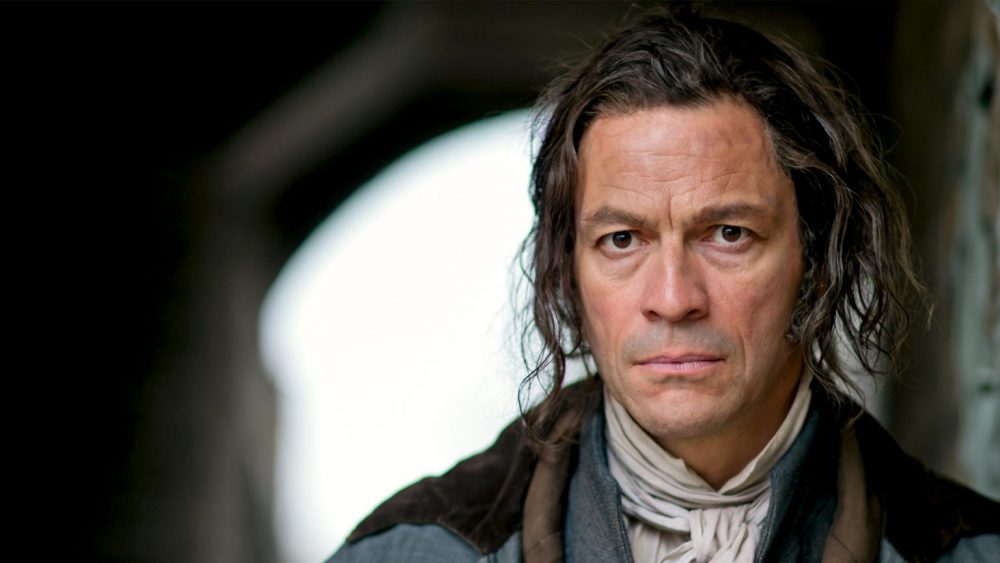
1. 2018 BBC Mini-Series,directed by Tom Shankland, starring Dominic West, written by Andrew Davies.
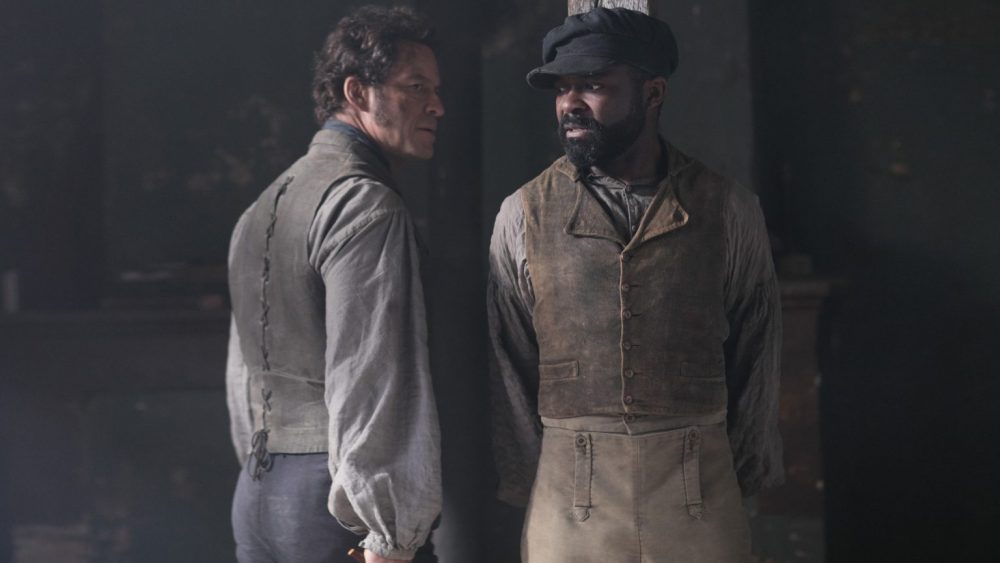
Amazing in scope, depth, and fidelity both to the novel and the TV medium, this is far and away my favorite screen version of Les Misérables. (The trailer doesn’t do it justice.) At over six hours, the BBC adaptation has the time to not only fully develop the novel’s intertwining stories, but also to go deep into the development of the major characters, especially contrasting various characters who find themselves in difficult situations and respond so differently.Some original dialogue between Jean Valjean and Inspector Javert (in one of my favorite portrayals of this character by David Oyelowo) offer insight into how these two men cannot understand each other, even after an undeserving Javert experiences Valjean’s compassion.
Novels and movies differ in essential ways, so no screen version would equal the novel, and vice versa. But the BBC miniseries offers insight into so many elements of the novel, with its lavish scale not just in length, but in scenery, setting, costumes, and actors. The BBC miniseries has, like the novel, a rich tapestried background of the times in France.
In terms of the screenplay, the script by Andrew Davies is superb especially in its fidelity to the novel’s spirit, even when it varies the timeline or compresses events recounted in the novel. Davies wisely chose a chronological retelling of the story, so that the relationships between the characters are clear and unforgettable. This gives us plenty of time to get to know and connect with the characters. The only drawback to this method is that the first episode (the first hour) is rather slow-moving. But this attention to character and set up is paid off in every subsequent episode.
Even though we are treated to in-depth portrayals of the many characters, Davies uses Jean Valjean as the center of the story around whom everything else revolves. Brilliantly structured as a miniseries, almost every episode ends with a real turning point for Jean Valjean: a choice that he must make if he is to become a man of both integrity and compassion, who chooses selfless love and true justice over evil and social conformity…every time. But every time, the choice seems to be more difficult—which is a tribute to the director, writer, and actors.
Davies’ expert script also reveals the novel’s brilliant comparisons and contrasts between good and evil, law and mercy, justice and love. In being faithful to the characters, especially Jean Valjean, the miniseries explores the theme of what to do in the face of the misery of oppression. Valjean’s freedom of choice to do the loving thing is a stunning contrast to the evil choices of others (like the Thenardiers) and the constricted choices of others (like Javert), and also a clarion call that is echoed in the selfless choices of other characters.
Almost every screen version of Jean Valjean has some appeal, even when other aspects of the film were lacking. But Dominic West’s Jean Valjean is by far the most compelling. He doesn’t hesitate to portray the ex-convict almost a monster that we pity but also feel a real aversion for. His growing heroism—as each choice confirms him more deeply in being the good man he has sought to become—is not without its cost. West offers us a wonderful portrayal of a man for whom justice, mercy, and love have painfully become his highest values…and who suffers greatly at all he loses. On his journey from ex-convict to privileged and wealthy mayor, to simple gardener, to a loving father, Jean Valjean finally returns to being the simple and hardworking peasant of his youth, but transformed: a peasant who is no longer misérable, because he selflessly lives interiorly and shares with others the life of God. Recognizing the depths of his own sinfulness and the greatness of God’s grace, Valjean seeks only to love, to choose the good of others. In all the screen versions that I have seen, Dominic West best portrays this transformation, revealing just the right amount of emotion, and becoming an onscreen version of the fictional saint. (Yes, if a fictional character could be canonized, Jean Valjean would be one of the great saints.)
The story of Les Misérables has always been a story that powerfully reveals the difference between good and evil, between the Gospel and various conventional and often sinful standards of society. Victor Hugo clearly intended to show the working of grace in a desperately wounded, broken soul, and the difference that correspondence to God’s grace in one man can make to individuals and society. But the novel and this miniseries go far beyond theory: we see sin and grace at work in the lives of characters who are startlingly real and identifiable. And all along through the story—whether the novel or screen—we root for Valjean: not just for him to escape physical prison, but also to escape the prison of selfishness, unhappiness, and spiritual poverty. Despite the sacrifices Valjean makes, we rejoice with him as he makes the right choices, above all the choice to love, because we become captivated not so much by his suffering, but by his goodness.
In a landscape of media that tout selfishness and evil, and victory at all costs, Les Misérables is an inspiring and rewarding story about the transforming power of self-sacrificing love, a love modeled on that of Christ.
If you love great stories or the classics, great acting, nuanced and fully developed characters, and a masterful plot that pulls all of these elements together, this Les Misérables is a must-see. Rarely do I find a film or show that is truly binge-worthy, but this BBC/PBS Les Misérables mini-series is an exception: a great choice for your viewing this summer.

 Windows to the Soul Blog